


12 Types of Healthcare Facilities: Services and Benefits
Key Takeaways
- Healthcare facilities vary widely in purpose, services, and patient needs—from emergency hospitals to in-home care and telehealth.
- Choosing the right facility depends on factors like the urgency of your condition, cost, specialization, and insurance coverage.
- Gaining a deeper understanding of how these facilities operate is essential for future healthcare professionals, and AUAMED provides the training and insight needed to succeed in this field.
When people think of healthcare, hospitals are often the first thing that comes to mind. But the truth is that there are many types of healthcare facilities, each designed to serve different needs.
A healthcare facility is any location where health services are provided. This can range from places that handle emergencies to centers focused on long-term care. These facilities collaborate to support patients of all types throughout every stage of life, providing comprehensive care that encompasses diagnosis and treatment, rehabilitation, and daily support.
✅ Request information on AUA's MD program TODAY!
Understanding the various types of healthcare facilities can help patients make informed decisions and find the care that best suits their specific situation.
Types of Healthcare Facilities
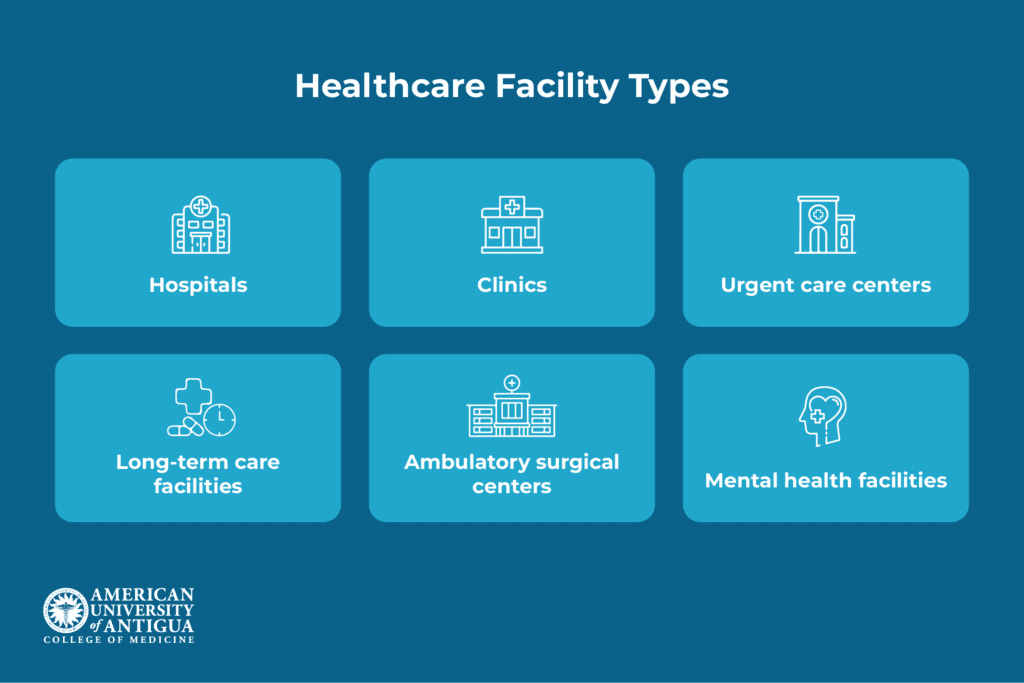
Here’s a quick look at the main types of healthcare facilities, each serving a unique purpose in keeping people healthy, treating illness, and supporting recovery when it’s needed most.
Hospitals
Hospitals are the backbone of acute medical care, equipped to handle everything from surgeries and serious injuries to childbirth and life-threatening illnesses. What sets them apart is their ability to treat patients who need constant monitoring, known as inpatient care, while also offering outpatient services such as diagnostic tests and minor procedures.
General hospitals provide a comprehensive range of services across various departments, including emergency medicine, internal medicine, and surgery. Specialized hospitals, on the other hand, focus on particular patient needs, such as children’s hospitals (pediatric) or heart centers (cardiac). Their broad capacity, around-the-clock staff, and advanced equipment make hospitals essential in both routine and emergency care.
Clinics
Clinics are often the first place people turn to for health concerns that don’t require a trip to the hospital. They offer outpatient care, meaning patients come in for a visit and leave the same day.
General clinics handle everyday issues, such as flu symptoms, check-ups, and minor infections. Specialty clinics go a step further, focusing on specific areas such as dermatology, physical therapy, or gynecology.
They are usually more accessible than hospitals and can be located within communities, inside retail stores, or as part of larger healthcare systems. Their convenience, shorter wait times, and lower costs make them a popular choice for non-urgent medical needs.
Urgent care centers
Urgent care centers are the go-to option when something is wrong but not urgent enough to warrant a trip to the emergency room. This typically includes sprained ankles, minor cuts, or sudden fevers that occur outside of regular hours. They fill the gap between primary care clinics and ERs by offering quick treatment without the long wait or high cost.
Unlike emergency rooms, which prioritize life-threatening issues, urgent care operates on a first-come, first-served basis, often with extended hours and weekend availability. Most centers are walk-in friendly and handle basic lab work, X-rays, and prescriptions. For non-emergencies that can’t wait, urgent care offers a practical, affordable solution.
Long-term care facilities
Long-term care facilities provide ongoing support for individuals who can’t fully care for themselves due to age, chronic illness, or disability. These facilities are designed for people who need help with daily activities like bathing, eating, or managing medications, but don’t require hospital-level care.
Residents often include elderly individuals or patients with conditions such as Alzheimer’s or advanced diabetes. Some facilities look and feel like small communities, while others have a more clinical feel, depending on the level of care required. The goal is to ensure comfort and stability over time, with skilled nurses and aides available around the clock.
Ambulatory surgical centers
Ambulatory surgical centers (ASCs) are facilities where patients can have minor or intermediate surgical procedures and head home the same day. They focus on efficiency, offering a smoother, faster, and often less expensive alternative to hospitals.
Common procedures done in ambulatory care include colonoscopies, cataract removal, and some orthopedic surgeries. These centers are equipped with the tools and staff needed for surgery but without the overnight stays, making them a smart choice for low-risk patients. Because of their specialized focus, ASCs can often offer shorter wait times and a more relaxed setting.
Mental health facilities
Mental health facilities support people dealing with emotional, psychological, or psychiatric challenges. These centers can be inpatient, offering 24-hour care for those in crisis, or outpatient, providing scheduled sessions for ongoing support.
Services range from individual therapy and group counseling to medication management and psychiatric hospitalization. Some focus on short-term intervention, while others offer long-term treatment plans. The goal is to help individuals stabilize, recover, and learn coping strategies.
These facilities may be standalone or part of larger hospitals and are staffed by licensed therapists, psychologists, and psychiatrists who work together to create personalized care plans.
Rehabilitation centers
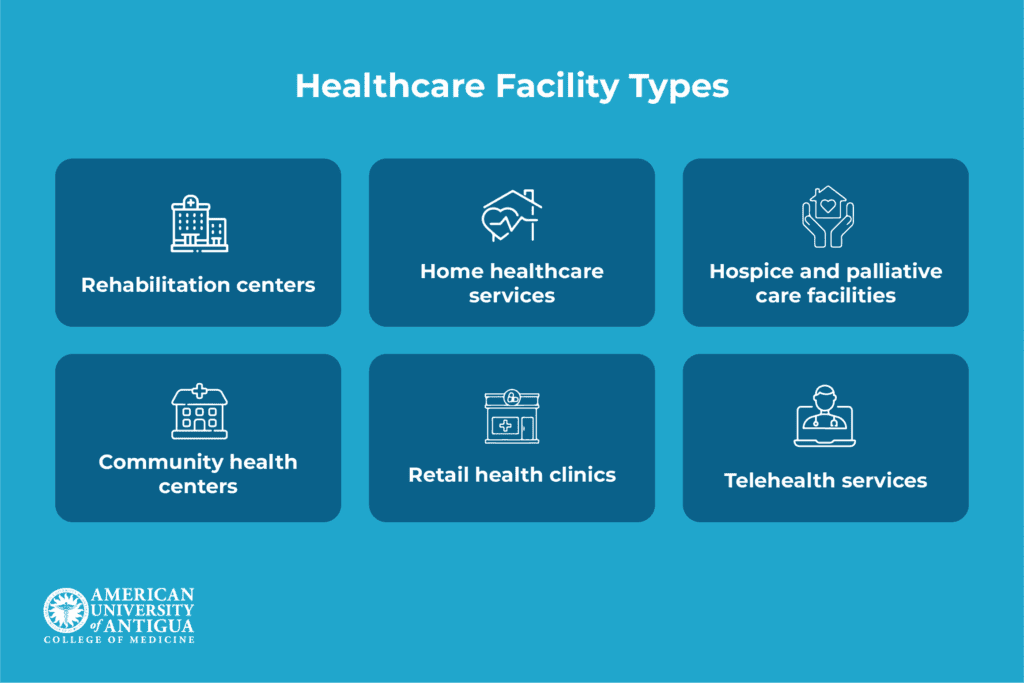
Rehabilitation centers are designed to help people recover physically, mentally, or emotionally after illness, surgery, injury, or substance use.
Some centers specialize in physical rehabilitation, offering services like physical therapy, speech therapy, and occupational therapy. Others focus on addiction treatment, combining medical care with counseling and support groups.
The length of stay can range from a few weeks to several months, depending on the condition and progress of the patient. These centers aim to restore independence and improve quality of life, whether someone is relearning how to walk or working to overcome an addiction.
Home healthcare services
Home healthcare brings medical care directly to people’s homes, offering a safe and convenient alternative to long hospital stays. This option is ideal for patients who are recovering from surgery, living with chronic conditions, or need extra support without leaving home.
Services often include skilled nursing, wound care, physical therapy, and assistance with daily activities such as bathing and meal preparation. Care is typically arranged by a doctor and carried out by nurses or certified aides through a licensed home health agency. It allows patients to heal in familiar surroundings while still receiving professional medical attention.
Hospice and palliative care facilities
Hospice and palliative care facilities focus on comfort, dignity, and quality of life for patients facing serious or terminal illnesses. Palliative care can begin at any stage of illness and may be combined with curative treatments, while hospice care is usually offered when treatment is no longer effective, and life expectancy is limited.
Both services provide pain management, symptom relief, and emotional support for patients and their families. Care may be delivered in standalone facilities, nursing homes, or even in the patient’s own home. These services are about making the most of each day, with compassion at the center.
Community health centers
Community health centers are vital hubs for affordable care in underserved or low-income areas. These nonprofit centers aim to remove barriers to healthcare by offering services on a sliding fee scale based on income.
They provide a wide range of services, including routine check-ups, dental care, reproductive health, vaccinations, and chronic disease management. Many also offer behavioral health support and language interpretation services.
Staffed by doctors, nurse practitioners, and support teams, these centers prioritize prevention and early intervention. By keeping care accessible and local, community health centers help reduce health disparities and improve overall community well-being.
Retail health clinics
Retail health clinics are small walk-in care centers usually located inside pharmacies, grocery stores, or big-box retailers. They’re built for convenience, offering quick access to care for common health needs like colds, flu shots, sore throats, or minor infections. Some also provide basic screenings, vaccinations, and wellness checks.
Staffed primarily by nurse practitioners or physician assistants, these clinics are ideal for people who need care outside of regular doctor hours or don’t have a primary care provider. No appointment is usually needed, and costs tend to be lower than at traditional clinics. They’re all about keeping care quick, easy, and accessible.
Telehealth services
Telehealth services use video calls, phone chats, and apps to connect patients with healthcare providers remotely. It’s a flexible option for non-emergency situations like follow-ups, therapy sessions, or medication management.
This type of care removes the need to travel, making it especially helpful for people in rural areas or with limited mobility. While telehealth doesn’t entirely replace in-person visits, it works well for routine consultations and ongoing support.
Many healthcare systems now blend virtual and physical care to improve convenience and continuity. As technology advances, telehealth is becoming a regular and reliable part of everyday healthcare.
Choosing the Right Healthcare Facility
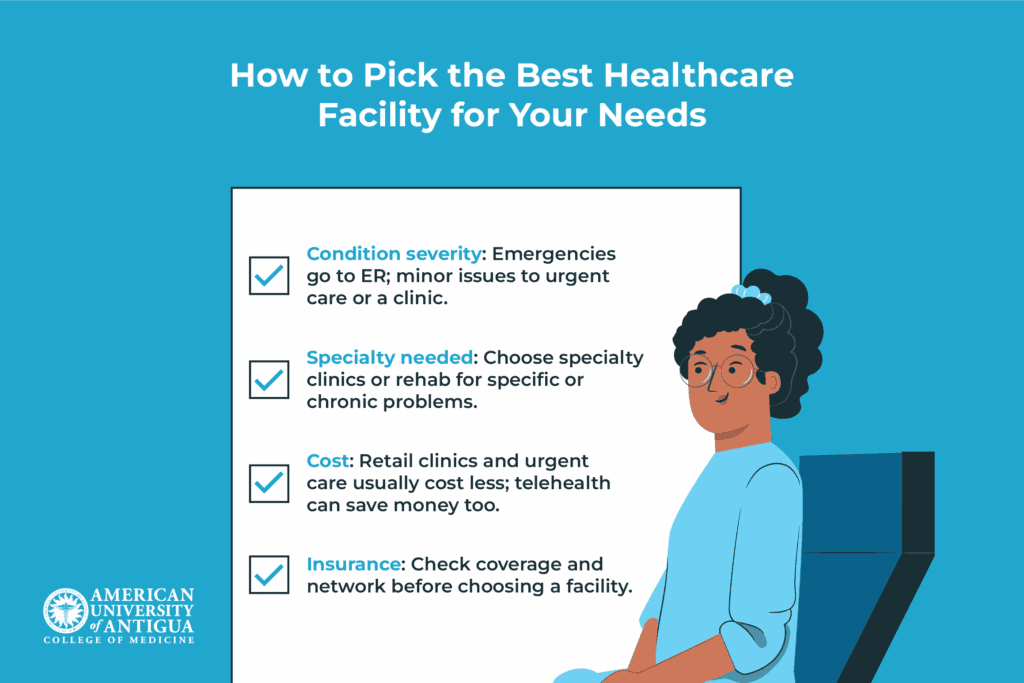
With so many healthcare options available, it can be hard to know where to go when you need care. Choosing the right facility depends on your specific situation, and making an informed decision can save you time, money, and stress. Here are some key things to think about before you seek treatment:
- Severity of your condition: For life-threatening emergencies, always go to a hospital emergency room. For less urgent needs, an urgent care center or clinic might be more appropriate.
- Required specialty: If your issue involves a specific part of the body or a chronic condition, a specialty clinic or rehabilitation center may be the best fit.
- Cost: Retail clinics and urgent care centers often cost less than emergency rooms or hospitals. Telehealth can also be a budget-friendly option for certain services.
- Insurance coverage: Always check what your insurance plan covers. Some facilities may be out-of-network or require referrals for certain services.
Conclusion
Each healthcare facility plays a specific role in keeping communities healthy, from emergency rooms that handle life-threatening situations to community clinics offering everyday care. Understanding these differences helps patients make better decisions and allows future healthcare professionals to serve more effectively.
For students passionate about making a real difference in people’s lives, learning how these facilities work is just the beginning. With the Doctor of Medicine program at AUAMED, you’ll gain the knowledge and hands-on experience needed to confidently navigate today’s healthcare system with confidence.
So, join a community dedicated to excellence, compassion, and impact because healthcare begins with understanding where care happens.
Frequently Asked Questions (FAQs):
What is the difference between a healthcare provider and a healthcare facility?
A healthcare provider is an individual who delivers medical care, such as a doctor or nurse, while a healthcare facility is the location where care is provided, typically a hospital or clinic.
Are all healthcare facilities required to be licensed or accredited?
Most healthcare facilities are required to be licensed by state or national authorities, and many also seek accreditation to meet quality and safety standards, although this is not always mandatory.
✅ Request information on AUA's MD program TODAY!
