


What Diseases Does an Endocrinologist Treat?
Key Takeaways
- Endocrinologists treat hormonal conditions affecting the thyroid, pancreas, adrenal glands, pituitary gland, and reproductive system.
- Common conditions endocrinologists treat include diabetes, thyroid disorders, osteoporosis, and PCOS.
- Early identification and proper management of endocrine disorders can prevent serious complications like kidney damage.
- Endocrinologists work with other specialists to provide complete care for hormone-related conditions.
Your endocrine system quietly regulates some of your body’s most important functions: metabolism, growth, reproduction, and mood. This network of glands produces hormones that act as chemical messengers, keeping your body balanced and functioning properly.
When these glands produce too much or too little of a hormone, your entire system can be affected. Endocrinologists are medical doctors who specialize in identifying and treating these hormonal imbalances. They manage both common conditions like diabetes and rare disorders that affect multiple glands.
✅ Request information on AUA's MD program TODAY!
This article breaks down the main diseases endocrinologists treat, organized by the glands and systems they affect, so you can better understand when to seek this specialized care.
Common Conditions Endocrinologists Treat
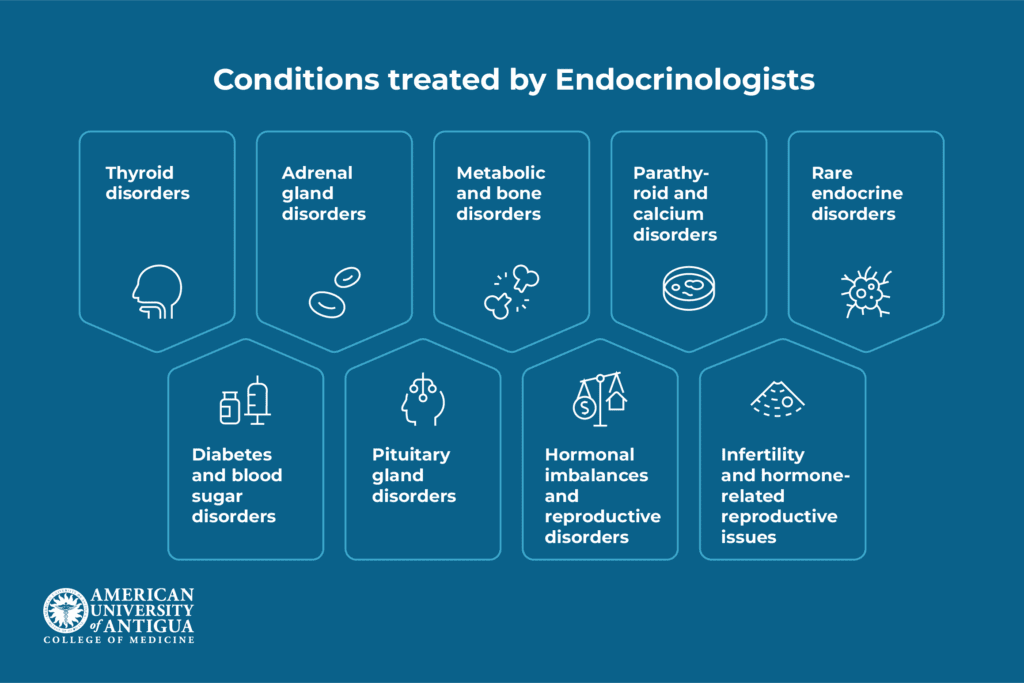
Endocrinologists manage a wide range of hormone-related diseases. These conditions are typically chronic and require ongoing monitoring and treatment. Because hormones affect so many body systems, endocrine disorders can impact your metabolism, bone health, reproductive function, and overall well-being.
But, with early identification and proper treatment, many of these conditions can be managed effectively, allowing you to maintain a high quality of life. Let’s look at the specific diseases endocrinologists treat, organized by the glands and systems involved.
Thyroid Disorders
Your thyroid gland, located at the base of your neck, controls your metabolism, energy levels, and body temperature. When it malfunctions, the effects can be felt throughout your entire body.
Hypothyroidism occurs when your thyroid doesn’t produce enough hormones. You might feel constantly tired, gain weight unexpectedly, or notice that you’re always cold. Hyperthyroidism is the opposite: too much thyroid hormone can cause a rapid heartbeat, weight loss, anxiety, and heat intolerance.
Endocrinologists also identify and treat thyroid nodules (lumps in the thyroid) and thyroid cancer. Through blood tests that measure thyroid hormone levels, they can identify what’s causing your symptoms and create a treatment plan.
Treatment varies based on your condition. Hypothyroidism typically requires daily medication to replace missing hormones. Hyperthyroidism might be managed with medication, radioactive iodine therapy, or surgery. Without treatment, thyroid disorders can lead to heart problems, brittle bones, or severe metabolic issues.
Diabetes and Blood Sugar Disorders
Diabetes is one of the most common reasons people see an endocrinologist. This condition affects how your body processes glucose (sugar), which is your main energy source.
Type 1 diabetes happens when your immune system attacks the cells that produce insulin. Type 2 diabetes occurs when your body becomes resistant to insulin or doesn’t produce enough. Gestational diabetes affects some women during pregnancy.
Insulin is the hormone that allows glucose to enter your cells for energy. Without enough insulin or when cells don’t respond to it properly, glucose builds up in your blood. Over time, high blood sugar can damage your nerves, kidneys, eyes, and blood vessels.
Endocrinologists help you manage diabetes through medication, insulin therapy, diet planning, and regular monitoring. They also treat prediabetes and insulin resistance, which are conditions that can develop into Type 2 diabetes if not addressed early. Working with an endocrinologist can help prevent or delay serious complications and improve your day-to-day blood sugar control.
Adrenal Gland Disorders
Your adrenal glands sit just above your kidneys and make hormones that help manage stress, blood pressure, and metabolism. When they don’t work properly, it can cause serious changes in how your body functions.
Cushing’s syndrome happens when your body has too much cortisol (the stress hormone). This can cause weight gain, particularly in your face and upper back, muscle weakness, high blood pressure, and mood changes. Addison’s disease is the opposite: your body doesn’t produce enough cortisol and aldosterone, leading to severe fatigue, darkened skin, weight loss, and low blood pressure.
Endocrinologists use blood and urine tests to measure hormone levels and imaging studies to look for tumors or other abnormalities. Treatment for Cushing’s syndrome might involve surgery to remove a tumor, medication, or radiation. Addison’s disease requires lifelong hormone replacement therapy.
These conditions can be life-threatening if not treated, but with proper management, most people with adrenal disorders can return to normal activities.
Pituitary Gland Disorders
The pituitary gland, about the size of a pea at the base of your brain, is often called the “master gland” because it controls other endocrine glands. It produces hormones that affect growth, reproduction, metabolism, and stress response.
Growth hormone deficiency can affect children and adults differently. In children, it leads to slower growth and shorter height. In adults, it causes reduced muscle mass, low energy, and changes in body composition. Pituitary tumors can cause the gland to produce too much or too little of certain hormones, affecting everything from menstrual cycles to bone density.
Endocrinologists identify pituitary problems through blood tests that measure hormone levels and MRI scans to look for tumors. Treatment might include medication to replace missing hormones, drugs to block excess hormone production, or surgery to remove tumors. Some patients need hormone therapy for life.
Metabolic and Bone Disorders
Hormones play a major role in how your body processes energy and maintains bone strength. When hormone imbalances affect these processes, endocrinologists step in to help.
Obesity often has hormonal components that endocrinologists can address. While not all weight issues are hormonal, conditions like insulin resistance, thyroid disorders, or Cushing’s syndrome can contribute to weight gain that’s difficult to lose through diet and exercise alone.
Osteoporosis causes weak and brittle bones. Many hormone imbalances, including low estrogen after menopause, thyroid problems, or excess cortisol, can contribute to bone loss. Paget’s disease is another bone disorder where old bone tissue is replaced too rapidly, resulting in fragile, misshapen bones.
Endocrinologists assess your hormone levels and bone density to create a treatment plan. This might include hormone therapy, medications to strengthen bones, calcium and vitamin D supplements, as well as lifestyle changes. Preventive care is especially important for bone health, as the earlier you address hormonal imbalances, the better you can protect your bones.
Hormonal Imbalances and Reproductive Disorders
Reproductive hormones affect more than fertility; they influence mood, energy, bone health, and overall well-being in both men and women.
Polycystic ovary syndrome (PCOS) is one of the most common hormonal disorders in women. It causes irregular periods, excess facial and body hair, acne, and difficulty getting pregnant. Many women with PCOS also struggle with insulin resistance and weight gain.
Menopause marks the end of menstrual cycles. It brings hormonal changes that can cause hot flashes, mood changes, night sweats, and bone loss. Low testosterone in men can lead to decreased energy, reduced muscle mass, lower sex drive, and mood changes.
Endocrinologists can balance these hormones through medication, hormone replacement therapy, or lifestyle modifications. For PCOS, treatment might include medications to regulate periods, reduce excess hair growth, and improve insulin sensitivity.
These specialists often work closely with gynecologists for women’s health issues and urologists for men’s health concerns, providing complete care for hormone-related reproductive problems.
Parathyroid and Calcium Disorders
Your four tiny parathyroid glands, located near your thyroid, control calcium levels in your blood and bones. Calcium is essential for bone strength, nerve signaling, and muscle function.
Hyperparathyroidism develops when one or more parathyroid glands become overactive, producing too much parathyroid hormone. This pulls calcium from your bones into your blood, weakening your skeleton and causing kidney stones, fatigue, and muscle weakness.
Hypoparathyroidism is less common but happens when your parathyroid glands don’t produce enough hormone. This leads to low blood calcium, causing muscle cramps, tingling in your fingers and toes, and brittle bones.
Endocrinologists identify these conditions through blood tests that measure calcium and parathyroid hormone levels. Treatment for hyperparathyroidism often involves surgery to remove the overactive gland. Hypoparathyroidism needs calcium and vitamin D supplements to maintain proper levels.
Infertility and Hormone-Related Reproductive Issues
Hormones from your thyroid, pituitary, and reproductive glands must work together for normal fertility. When any of these are out of balance, getting pregnant can become difficult.
In women, hormonal issues can prevent regular ovulation or cause irregular periods. In men, hormone imbalances can affect sperm production or quality. Problems with thyroid hormones, prolactin (from the pituitary), or sex hormones can all contribute to infertility.
Endocrinologists help couples struggling to conceive by identifying and treating the underlying hormonal causes. They run tests to check hormone levels and may prescribe medications to restore balance. For example, treating an underactive thyroid or lowering elevated prolactin levels can often restore fertility.
For more complex cases, endocrinologists work alongside reproductive endocrinologist specialists and fertility clinics to provide complete care. Sometimes, hormone regulation alone is enough to help couples conceive naturally.
Rare Endocrine Disorders
While less common, some endocrine conditions require specialized, long-term management. These rare disorders often run in families or involve tumors affecting multiple glands.
Multiple Endocrine Neoplasia (MEN) is a group of inherited conditions where tumors develop in two or more endocrine glands. Depending on the type, these tumors can affect the parathyroid, thyroid, pancreas, or adrenal glands. Regular screening is essential for early identification.
Pheochromocytoma is an adrenal gland tumor that produces excess adrenaline, causing dangerous spikes in blood pressure, rapid heartbeat, severe headaches, and sweating. Without treatment, it can lead to a heart attack or stroke.
These rare conditions require advanced testing, including genetic screening, specialized imaging, and hormone level monitoring. Treatment often involves a team approach, with endocrinologists working alongside surgeons, oncologists, and genetic counselors. For medical students and physicians in training, understanding these complex pathologies is essential for providing complete endocrine care.
When to See an Endocrinologist
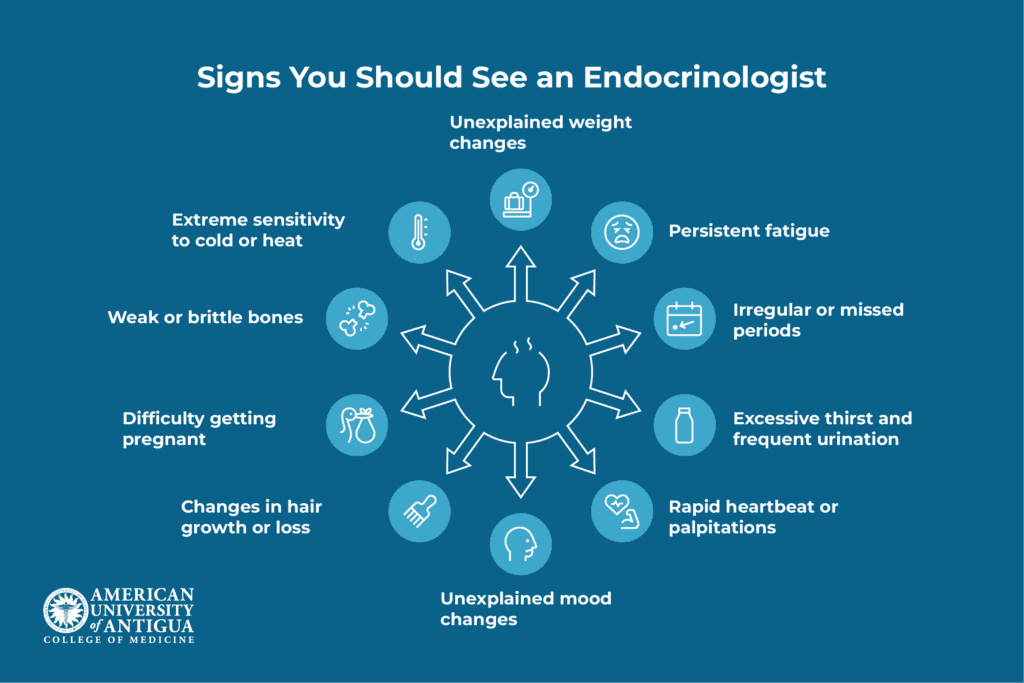
You might need to see an endocrinologist if you’re experiencing any of these symptoms:
- Unexplained weight changes (gain or loss despite normal eating habits)
- Persistent fatigue that doesn’t improve with rest
- Irregular or absent menstrual periods
- Excessive thirst and frequent urination
- Rapid heartbeat or palpitations
- Unexplained mood changes, anxiety, or depression
- Changes in hair growth or loss
- Difficulty getting pregnant
- Weak or brittle bones (repeated fractures)
- Extreme sensitivity to cold or heat
Your primary care doctor might also refer you to an endocrinologist if:
- Blood tests show abnormal hormone levels
- You have diabetes that’s difficult to control
- You’ve been found with a thyroid nodule or other endocrine growth
- You have multiple hormone-related problems that overlap
Endocrinologists are especially helpful for complex cases where several conditions interact. For example, someone with diabetes, thyroid disease, and osteoporosis needs coordinated care to manage all three conditions effectively. Early referral to an endocrinologist can prevent complications and improve your long-term health outcomes.
For those interested in becoming an endocrinologist, understanding these referral patterns is important for future practice.
How Endocrinologists Diagnose and Treat Disorders
Endocrinologists use a combination of methods to identify what’s causing your symptoms and create an effective treatment plan.
Diagnostic methods include:
- Blood tests to measure hormone levels, glucose, calcium, and other markers
- Urine tests to check for hormone levels over a 24-hour period
- Stimulation and suppression tests, where medications are given to see how your glands respond
- Imaging studies, such as ultrasounds, CT scans, or MRIs, to look at gland size and identify tumors
- Bone density scans to assess bone strength
- Genetic testing for inherited endocrine disorders
Once they identify your condition, treatment options might include:
- Medication to replace missing hormones or block excess production
- Hormone therapy to restore balance
- Insulin or other injectable treatments for diabetes
- Surgery to remove tumors or malfunctioning glands
- Lifestyle changes, including diet modification, exercise, and stress management
Most endocrine conditions require long-term follow-up. Your endocrinologist will monitor your hormone levels regularly and adjust your treatment as needed. They’ll also watch for complications and work with other specialists when necessary.
Evidence-based practice guides every treatment decision. Your endocrinologist will explain why they recommend certain tests or treatments and help you understand what to expect. Patient education is a key part of managing chronic endocrine conditions successfully.
For those exploring medical specialties, endocrinology provides the chance to build lasting relationships with patients while treating complex, closely connected body systems.
Explore Endocrinology: A Vital Medical Specialty
Understanding how hormones affect overall health is essential for preventing disease and maintaining well-being. Endocrinology connects many areas of medicine, including internal medicine, surgery, pediatrics, and geriatrics.
For future physicians, endocrinology offers intellectual challenge and the satisfaction of helping patients manage complex conditions.
If you want to become a hormone specialist, you’ll need strong foundations in biochemistry, physiology, and patient care. AUA’s MD program provides complete training in internal medicine and prepares students for specialized fields like endocrinology. With clinical rotations at top hospitals across the U.S. and beyond, AUA students gain hands-on experience managing different types of hormonal conditions.
Frequently Asked Questions (FAQs)
What is the most common disease treated by an endocrinologist?
Diabetes is the most common condition treated by endocrinologists, affecting millions of people worldwide and requiring specialized management of blood sugar levels.
What does an endocrinologist check at a first appointment?
At your first visit, an endocrinologist reviews your medical history, performs a physical exam, orders blood tests to measure hormone levels, and may request imaging studies based on your symptoms.
Can endocrinologists perform surgeries?
Most endocrinologists do not perform surgery themselves, but they work closely with endocrine surgeons to manage patients who need procedures like thyroid removal or adrenal gland surgery.
What symptoms indicate that you should see an endocrinologist?
Key symptoms include unexplained weight changes, persistent fatigue, irregular periods, excessive thirst, mood changes, difficulty getting pregnant, and abnormal blood test results showing hormone imbalances.
✅ Request information on AUA's MD program TODAY!
